How to re-calibrate your autonomic nervous system.
tomas
Just a bit of background on the point of this...
The autonomic nervous system (ANS) controls your background processes, such as digestion, heart rate, salivation and breathing. It also controls your anxiety state, with two opposing forces, the SNS and PNS.
The sympathetic nervous system (SNS) activates the Flight or Fright response state, preparing the body for action. The lungs open up, heart-rate increases, digestion is put on hold, the pupils dilate.
The parasympathetic nervous system (PNS) brings you towards the ‘Rest and Digest’ state. The body relaxes, breathing and heart rate slow down, and blood is directed towards the digestive system.
The PNS is largely controlled by the vagus nerve.
The main power behind the relaxing PNS force, the vagus relaxes your muscles, slows your heart and calms you down. Stimulate your vagus by holding your breath for around 30 seconds, dipping your face in cold water, coughing, or our favourite, hopping in the sauna.
Each time the vagus is stimulated, your heart pauses, changing your heart rate variability.
Your heart doesn’t beat as regularly as a metronome. Every beat is a little different, this difference is your heart rate variability (HRV).
Low HRV.
The differences can be low, when your SNS has hit the ‘Fight or Flight’ alarm and your heart kicks into high gear. Then the beats come regularly, like techno. Your heart is ready for an emergency.

High HRV.
The differences can be high, when your PNS is dominant, and your heart is recuperating. It slows down its beats, and they come at irregular intervals, like jazz. Your heart is relaxing and playfully building resilience for future crises.

CVC indicates how well controlled your heart is by your vagus. A high value indicates a responsive, sensitive and rapidly changing system and correlates with good health, positive emotions, effective executive function and overall better self-regulation. Think of it as a measure of how much emotional unflappability you have in reserve.
The idea is that for most people today, in the always-on, always-busy smartphone/social-media society, there is the emergence of a huge swathe of people that are close to burnout because they have a build-up of chronic stress that results in them being fixed in a half-frozen, flight/fight state. In reality it's more like the dynamic range of the HPA-axis is really tight.
They never truly relax, they never really get physiologically stressed. They work, and when you work and focus, you tense your muscles a little, when you finish work, you dance or sing or wrestle and the muscles unwind. If you skip the dancing/singing/wrestling, the tension remains and you add to it with the next focused moment, and the next, etc.
After a few years, you have a lot of muscular tension, a posture that reflects this stress, and even the beginning of calcification of ligaments.
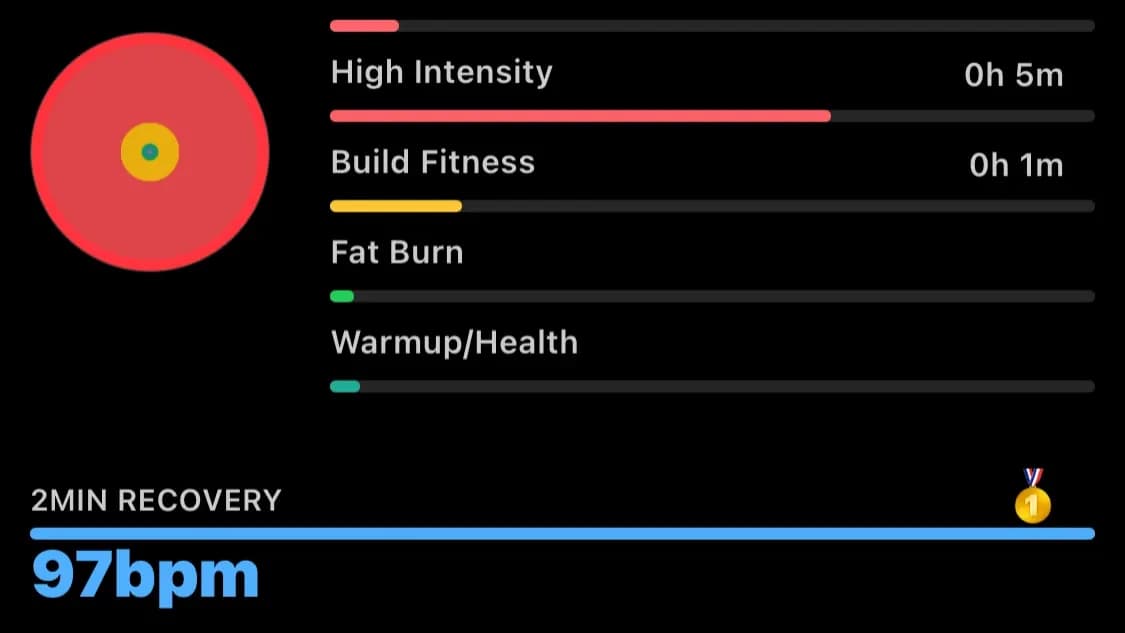
The 'cure' is to reset the HPA axis. You just need to rev it to the maximum, and then set it to the minimum. Ideally you would do a martial art/combat sport. BJJ/Muay Thai, boxing etc. However anything that gets your heart rate to your personal max. Ramp up slowly, but aim to do HIIT training 2-5 times a week. It only takes ten minutes, I use a heavy bag if I am WFH and get my heart rate up to around 200 BPM.
Then you bring it down to a minimum, stop training, sit down and do some meditation, focus entirely on controlling your breathing and heart rate, and try to get yourself completely calm as rapidly as possible.
The target is your 2(or 1 or 3...)-minute heart rate drop after you stop training, find out what that is, find you max heart-rate during the training session, and then aim to increase them both over time.
You can also just do this when running. Go for a run, get your heart-rate up, when you get to a hill, sprint it, and then at the top, slow everything down and slowly jog until you get everything back under control.
One month of that will absolutely change your physiology. A year of it and you will be a different person, mentally and physically.
caveat
First off, if you're out of shape, take it slowly. Worry about making a habit out of it first, and listen to your body.
Secondly, This is a hack, you have a giant nerve that is not healthy, and you're going to aggressively train it, and the side-effect is that you will be less stressed, less anxious, less prone to panic and more emotionally stable.
However, this is not fixing the problems you have that caused you to be in that state. If you are close to burnout, it's not just that you should train more (although that is step one for change, you can't change until you are capable of change, which means not being burned out).
How many hours a day are spent on screens? How much time is spent with quality, IRL socialisation with good friends that you love and that love you? How much time is spent silently, being creative with your hands? How much time is spent working in a job you don't care about? How often do you reach for your phone?
Etc etc etc.
https://www.reddit.com/r/HIIT/
https://www.reddit.com//r/yoga/
https://www.reddit.com/r/nosurf/
Good luck!
PS. The entire benefits of this kind of thing are not even remotely just to the Vagus, it's systemic. Blood flow, brain oxygenation, neuroplasticity, muscle insulin response...
Best
Join this community to comment

smnkgv
This is a great article with the science behind it. A good reminder that that the post-industrial world we live in is not necessarily something we've been evolutionary prepared for.

